
There are few household annoyances in Orange County quite like a slow drain. Water pooling at your feet in the shower, a kitchen sink that takes forever to empty, or a toilet that’s being stubborn about flushing; it’s frustrating, and it always seems to happen at the worst possible time.
The good news is that a lot of drain clogs can be handled without calling a plumber. Before you reach for the phone, here are some tried-and-true methods worth trying first along with a few things you should probably stop doing if you’ve been doing them.
Key Takeaways
- Hot water and baking soda and vinegar handle most mild clogs. Always start here before reaching for anything else
- A plunger, drain stick, or wire hanger takes care of most bathroom clogs without any special tools
- Chemical drain cleaners can damage pipes over time so skip them
- If multiple drains are backing up or the same drain keeps coming back, it’s time to call a professional
Start Simple: Hot Water
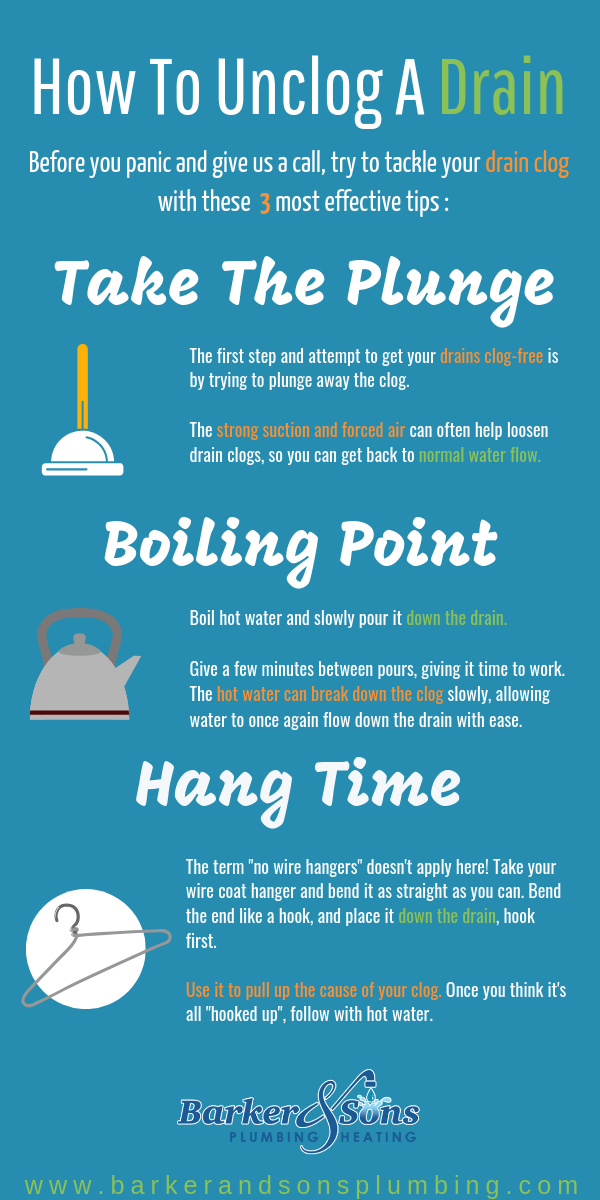
It sounds almost too easy, but hot water is genuinely the best first step for most clogs, especially in kitchen drains where grease and soap buildup are the usual culprits. Bring a full pot to a boil, then pour it down the drain slowly in two or three stages, giving it a few seconds between each pour to work through the clog.
This won’t fix every problem, but it costs nothing and takes about five minutes. Always worth trying first.
Baking Soda and Vinegar
This is the classic household drain remedy and it works for mild clogs. Pour about a cup of baking soda directly into the drain, followed by a cup of white vinegar. You’ll get a satisfying fizzing reaction as the two combine and go to work on whatever’s coating your pipes.
Cover the drain with a plug or cloth to keep the reaction working inside the pipe rather than bubbling back out. Let it sit for at least 15 minutes, then flush thoroughly with hot water. For tougher buildup, give it a full hour before flushing.
This method works best on soap scum, light grease, and general organic buildup. It won’t cut through a solid hair clog or a serious blockage deeper in the line.
Baking Soda and Salt
If you want more scrubbing action without the bubbles, try combining a cup of baking soda with half a cup of coarse salt. Pour the mixture down the drain and let it sit for several hours or overnight if you can. The abrasive combination scours buildup off the inside of your pipe walls. Follow up with a flush of boiling water.
This one works particularly well as a monthly maintenance treatment to keep drains running smoothly before a clog has a chance to develop.
Break Out the Plunger
If the baking soda methods don’t do it, a plunger is your next move. Make sure you’re using the right one; a cup plunger with a flat bottom works best for sinks, tubs, and showers. The bell-shaped toilet plunger isn’t ideal for flat drain openings.
For a double sink, plug the second drain with a wet cloth first so all the force goes toward the clog. Add a few inches of water to the sink so the plunger cup is submerged, press it firmly over the drain, and work it up and down for 20 to 30 seconds. When the clog releases, you’ll know because the water will rush right down.
Try a Drain Stick or Wire Hanger
For bathroom drains clogged with hair and soap scum, a drain stick is one of the most effective tools going. These are inexpensive, widely available at any hardware store, and work by reaching into the drain and hooking whatever’s causing the problem.
No drain stick? A straightened wire coat hanger with a small hook bent at one end gets the job done in a pinch. Insert it carefully, fish around for whatever’s caught in there, and pull it out. Not the most glamorous task, but it’s remarkably effective for shower and bathroom sink clogs.
Clean the P-Trap
The P-trap is the curved section of pipe directly under your sink. The one that looks like a sideways letter P when you open the cabinet beneath. That curve serves an important purpose, but it’s also exactly where debris and buildup tends to collect.
Cleaning it out is easier than it sounds. Place a bucket underneath to catch any water, unscrew the slip nuts by hand or with pliers, and remove the curved section. Empty it out, clean it with a brush, and put it back. Run water to check for leaks. This single step fixes a surprising number of stubborn sink clogs.
Use a Drain Snake for Deeper Clogs
When the clog is further down the line than a hanger or drain stick can reach, a drain snake, also called an auger, is the right tool. You can rent or buy one at most hardware stores. Feed the cable down the drain until you feel resistance, then twist and push to break up the obstruction. Pull back whatever material you can and flush the drain with water when it feels clear.
If you’re not comfortable using one yourself, or if the clog keeps coming back after you’ve cleared it, that’s a good signal to call a professional. Recurring clogs often point to something deeper such as buildup along the pipe walls, a partial blockage further down the line, or in Southern California homes, mineral scale from the region’s notoriously hard water.
Skip the Chemical Drain Cleaners
We know those bottles make big promises. But chemical drain cleaners are worth skipping, especially as a regular go-to. The active ingredients are caustic and can corrode pipe walls over time, particularly in older plumbing. They also tend to eat through just enough of a clog to restore some flow while leaving the rest behind to catch more debris.
If you’ve already used one and the drain still isn’t clearing, don’t reach for a second product. Mixing drain cleaning chemicals can create genuinely dangerous reactions. At that point, it’s time to call a plumber.
When It’s Time to Call a Professional Plumber
DIY methods work well for most routine clogs but there are situations where professional help is the right call:
- Multiple drains in your home are backing up at the same time
- The same drain keeps clogging even after you’ve cleared it
- You’re hearing gurgling sounds from drains or toilets when water runs elsewhere in the house
- There’s a sewage smell coming from any drain
- You’ve tried everything above and nothing is working
These are signs the problem is bigger than what’s sitting in your P-trap. In Orange County especially, hard water and aging pipe systems mean buildup can develop deep in the line over time, the kind of thing that calls for professional hydro jetting or a camera inspection to properly address.
Keep Your Drains Healthy Year-Round
A few simple habits go a long way toward preventing clogs before they start:
- Use a drain strainer in shower and tub drains to catch hair before it goes down
- Never pour cooking grease, coffee grounds, or oils down a kitchen drain
- Run hot water down the drain for a minute after doing dishes
- Do a baking soda and hot water flush once a month as a quick maintenance treatment
- Have your drains professionally cleaned every year or two if you’ve had recurring issues
A slow drain is an annoyance. A full backup is an emergency. Most of the time, catching things early and using the right method makes all the difference. And when it’s more than you want to tackle yourself, Barker and Sons is here to help from simple drain cleaning to hydro jetting and full sewer line service throughout Orange County. Give us a call at (714) 872-8109 or contact us online to schedule service.
@barkerandsons One stubborn clog, one expert team, and now this pipe is back in business! 💪 Anaheim, do your pipes need a check-up? Call the pros before a small problem becomes a BIG mess! #anaheim #anaheimcalifornia #anaheimplumbers #orangecountyca ♬ original sound – barkerandsons
Barker and Sons Plumbing & Rooter is available to assist with plumbing emergencies 24/7/365. Just dial 714-630-8766 or contact us online!
