Barker and Sons technician going over the job details with a happy customer.

Can Tree Roots Damage Your Sewer Line?
See Specials
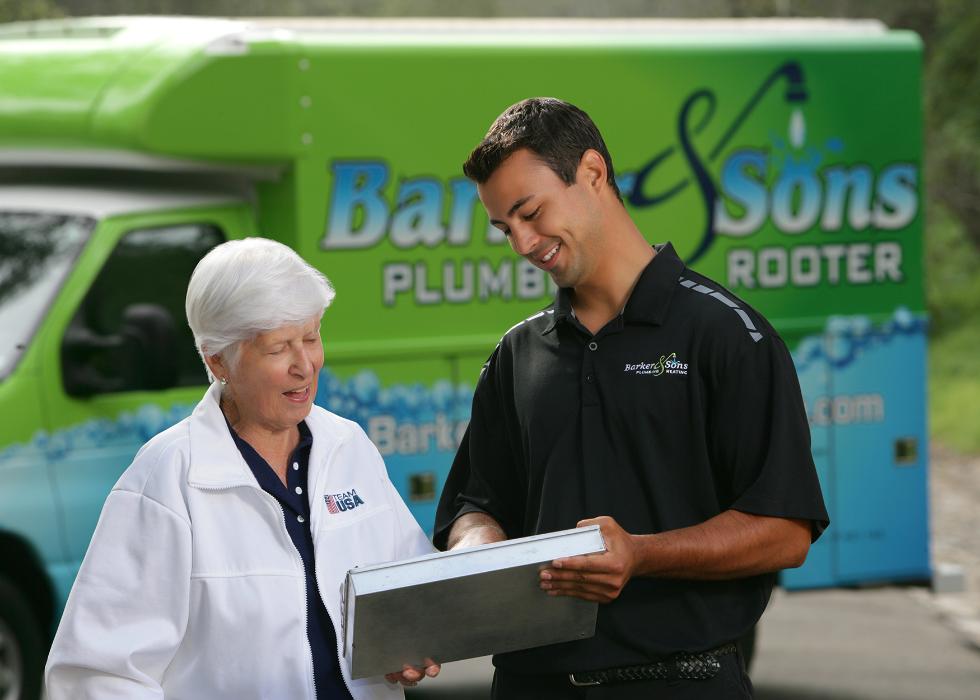
Barker and Sons technician going over the job details with a happy customer.

Tree roots in a sewer line are one of the most common causes of damaged and clogged sewer pipes in Orange County – and one of the most misunderstood. Roots slip in through tiny cracks and loose joints, grow into a dense mass inside the pipe, and can eventually cause enough structural damage to warrant full sewer line replacement. The tricky part is that it happens slowly – a drain that’s been a little sluggish, a toilet that occasionally gurgles, clogs that keep coming back. These aren’t random plumbing quirks. They’re often the first signs that roots have found their way in.

In Orange County, where many homes were built before 1977 and still have older clay or concrete sewer laterals, this problem is especially common. Those older materials crack more easily at the joints, and in a dry climate where roots are always searching for moisture, a leaking sewer pipe is one of the most reliable water sources a root system can find.

Barker & Sons has inspected and repaired sewer lines across Orange County since 1983. This guide covers how root intrusion works, how to spot it early, and what your options are when clearing roots is no longer enough.

How Tree Roots Get Into a Sewer Line – and Why Orange County Homes Are Prone

Tree roots don’t break into healthy pipes. They find the pipe because it’s already leaking – even slightly.

Water vapor and warmth escape through aging joints, tiny cracks, and worn seals in a sewer line. In drought-prone Orange County, that moisture is one of the most consistent water sources a root system can find, and roots follow it. Once a root tip reaches the opening, it works its way in and begins to expand.

Older lines are the most vulnerable. Clay and concrete pipes – common in Anaheim and throughout Orange County’s established neighborhoods – are more likely to crack and shift at the joints over time. PVC resists intrusion better, but it isn’t immune. With roughly half of the county’s homes built before 1977, many sewer laterals here are 45 to 60+ years old.
Warning Signs of Tree Roots in Your Sewer Line

Root intrusion builds gradually, which is why the early signs are easy to write off.

A single slow drain usually points to a clog in that fixture’s own line. When multiple drains are affected at once, the problem is almost always in the main sewer line. If you’re dealing with an active blockage right now, our rooter service can clear it quickly.

Can Tree Roots Really Break a Sewer Pipe?

Yes – and this surprises most homeowners who think of roots as a clog problem. They are, but they’re also a structural one.

Once roots are inside the pipe, they keep growing, widening the opening and pushing against the pipe walls from the inside. That pressure – combined with soil movement from established root systems – can crack clay pipes, collapse older concrete lines, and break apart joints that were already weakening. The longer roots stay inside a line, the more damage they do to the pipe itself.

How a Sewer Camera Inspection Shows You What’s Going On

Clearing a blockage tells you the drain is flowing again. It doesn’t tell you what caused it or what the pipe looks like inside. That’s what a camera inspection is for.

A small camera travels through the cleanout all the way to the main at the street, showing roots, cracks, offset joints, collapsed sections, and any outdated materials like terracotta clay, galvanized steel, or Orangeburg. That picture is what makes an honest recommendation possible.

If you’re not sure whether roots are the issue, a sewer camera inspection is the right first step.

Rooter Service and Hydro Jetting – Clearing Roots Is Not the Same as Fixing the Pipe

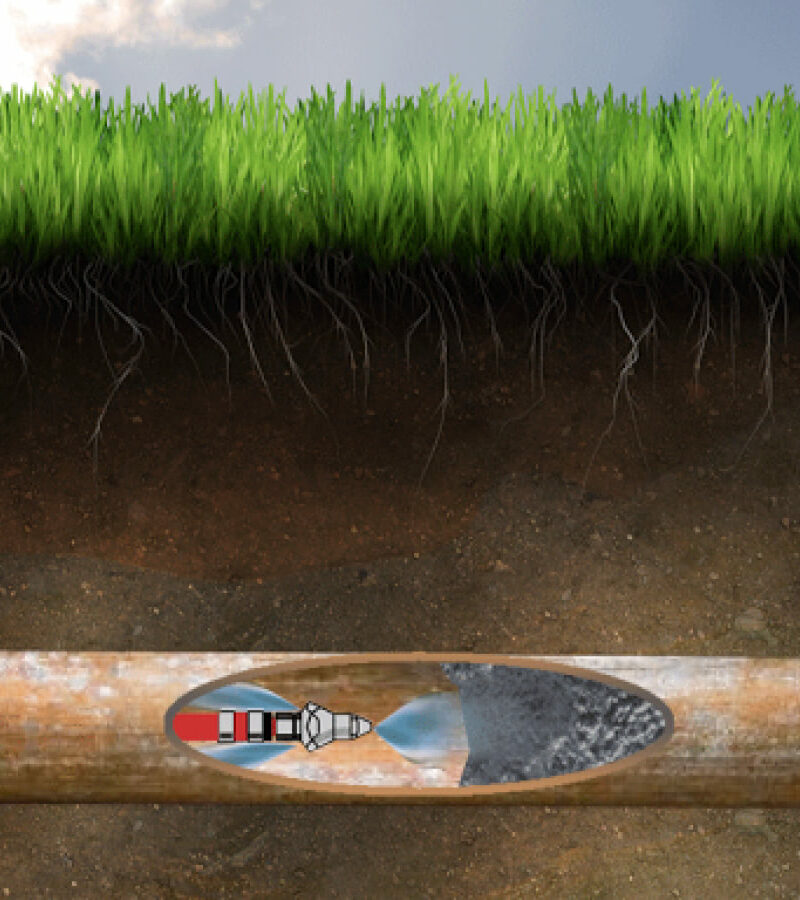
Rooter service uses a motorized mechanical auger to break through root masses inside the line. Hydro jetting goes further – using high-pressure water to scour the pipe walls clean of grease, scale, and root material.

Both restore flow. Neither repairs the pipe.

The crack or loose joint roots that came through are still there after clearing, and the tree is still growing. That’s why roots often return at the same spot – and why a camera inspection after clearing gives you the full picture of what you’re actually dealing with.

When Cutting Roots Stops Working – Signs It’s Time to Repair or Replace

At some point, clearing roots becomes a short-term fix for a long-term problem. Here’s how to recognize when that line has been crossed:

When the camera shows the pipe itself is compromised – not just the flow through it – repair or replacement becomes the more practical path. Our sewer line repair and sewer line replacement teams can walk you through what the camera shows and which option fits your situation.

Trenchless Sewer Repair – Fixing Root Damage Without Digging Up Your Yard

Most root-damaged lines don’t require a full excavation. Barker & Sons offers trenchless sewer repair and replacement using small access points instead of open trenches – preserving your groundcover, shrubs, and the trees themselves. Up to a hundred feet of pipe can be repaired or replaced this way. When the pipe still holds its shape, lining may apply; when damage is more severe, trenchless replacement handles collapsed, cracked, or root-filled lines without tearing up the yard.

Some situations still require traditional excavation, and we’ll always tell you honestly which one applies. Either way, it starts with a camera inspection.

Who Pays for Sewer Line Root Damage in Orange County?

The private sewer lateral – the pipe running from your home to the city main – is the property owner’s responsibility. If roots damage your lateral, you pay for the repair. Rules vary by city, so confirm with your local public works department where your responsibility ends and the city’s begins.

On the insurance side, most standard homeowners policies exclude damage caused by tree roots, age, or gradual wear. Camera inspection documentation from Barker & Sons may support a claim if your policy includes optional sewer line coverage.

How to Prevent Tree Roots From Getting Into Your Sewer Line

You can’t always prevent roots from finding a pipe, but you can reduce the risk.

Catching a small intrusion early is almost always less disruptive and less costly than addressing one that’s been growing for years.

Think Tree Roots Might Be in Your Sewer Line? Let’s Take a Look.

Barker & Sons has been inspecting and repairing sewer lines across Orange County since 1983. We’re a family-owned company with 4.8 stars and 4,500+ Google reviews, and our licensed plumbers bring over 40 years of experience to every camera inspection and sewer repair call. If you’re noticing slow drains, recurring clogs, or anything else that doesn’t feel right, a camera inspection is the fastest way to know what you’re dealing with. We serve Anaheim, Irvine, Fullerton, Huntington Beach, Costa Mesa, and communities throughout Orange County – see our full service areas for the complete list.

Tree Roots in Sewer Line FAQs

Can tree roots grow back after they've been cut out of a sewer line?

Yes – cutting removes the roots inside the pipe, but the opening they entered through is still there, which is why roots often return at the same spot and why a camera inspection is recommended when the problem repeats.

Will removing the tree fix my sewer line?

Not by itself – it stops new growth, but it doesn’t repair the crack or joint that let the original roots in, so a camera inspection is still needed to assess the pipe’s condition.

How do I know if tree roots are in my main line and not just one fixture?

When roots are in the main line, multiple drains are typically affected at once – slow drains, gurgling, or backups showing up in more than one location at the same time.

Does homeowners insurance cover tree root damage to a sewer line?

Most standard policies exclude tree root damage, though some offer optional sewer line coverage – camera documentation from Barker & Sons can support a claim if coverage applies.

Do I have to dig up my yard to fix a root-damaged sewer line?

Not always – trenchless methods can address most root-damaged laterals using small access points, preserving your landscaping and the trees themselves.

How often should I have my sewer line inspected if I have large trees near the line?

Annual inspections are recommended for homes with mature trees near the lateral, older pipe materials, or a history of recurring clogs.

Can I use chemical root killers to treat tree roots in my sewer line?

Chemical treatments can slow regrowth but don’t remove existing root masses or repair the pipe – professional clearing and a camera inspection are the more reliable path.

What pipe materials are most resistant to tree root intrusion?

PVC is the most resistant because its joints are tighter and it doesn’t corrode like clay, Orangeburg, or galvanized steel – though no material is completely immune at the joints.